
Aldea Escondido Annexation
A proposed municipal boundary change and land-use zoning change with lasting consequences for county unincorporated Escondido rural residents.
Note: Donations made through the petition platform go directly to the platform, not Protect Rural Escondido.
Sign the PetitionWhat is being proposed?
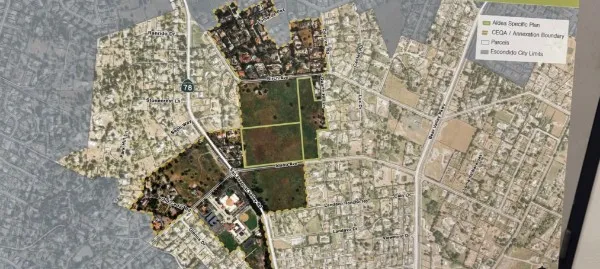
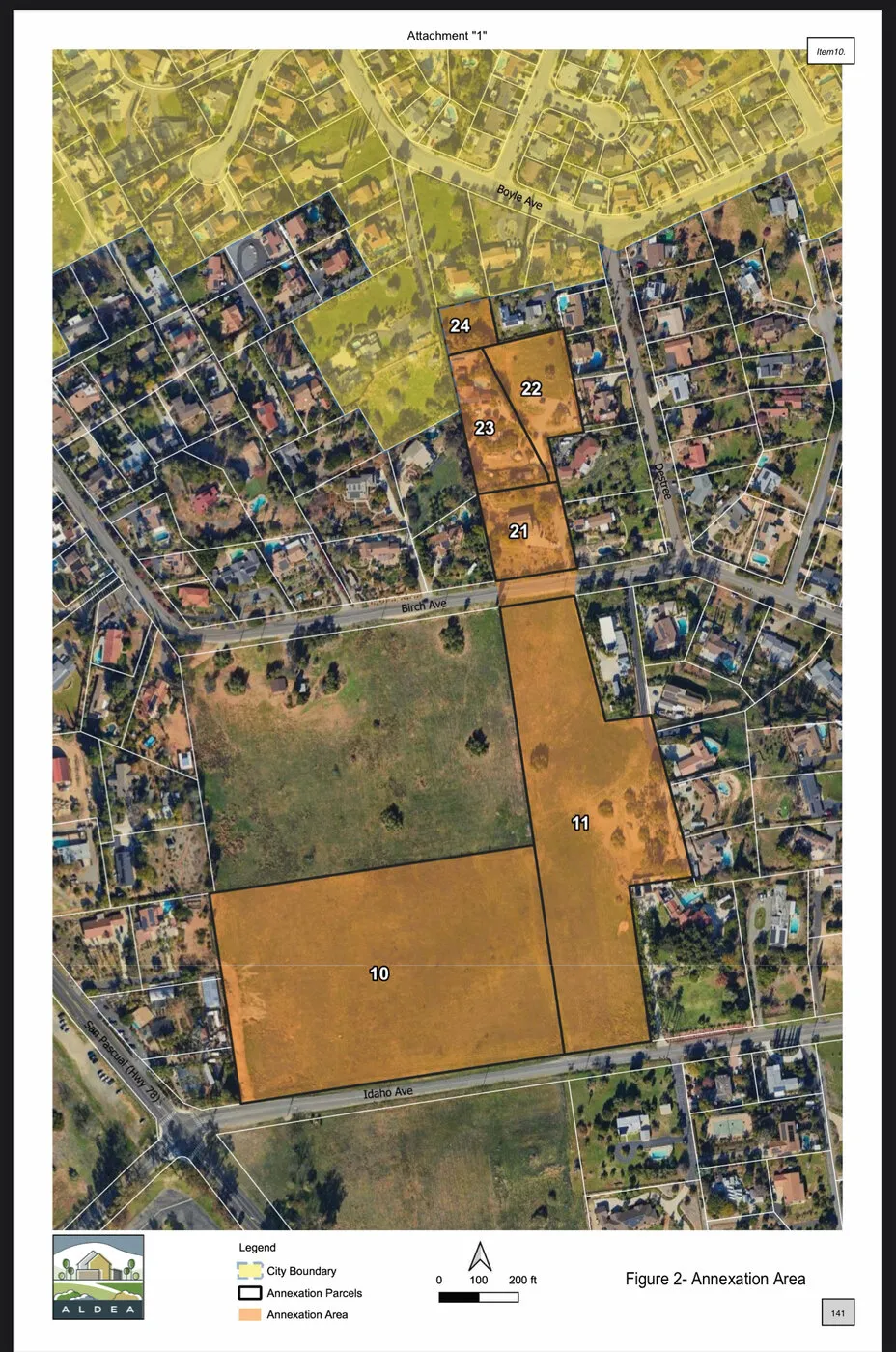
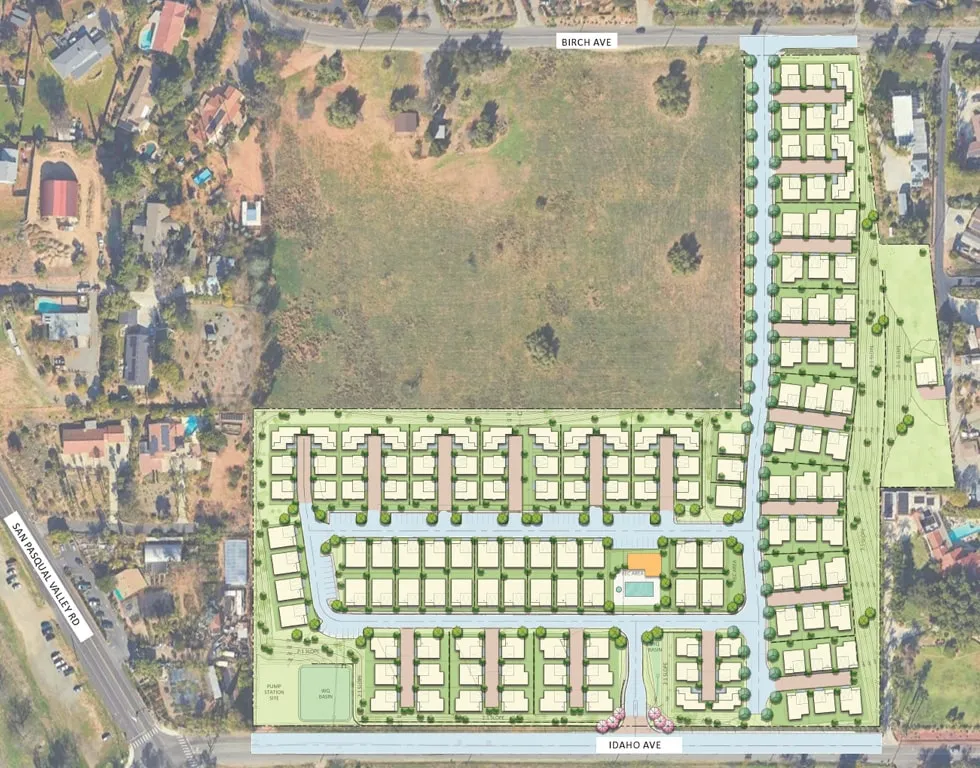
Escondido city records describe a request to annex about 27 acres across six parcels from unincorporated San Diego County into the City of Escondido. The City's September 11, 2024 document shows the developer concept seeking a denser residential land-use designation on 17.56 vacant acres and showed a 193-home development concept for the Birch Avenue parcel with high density zoning increase 12 to 18 times above current county zoning. The Idaho Avenue parcel development plan is in question and could be targeted for a zoning increase of 18 times above current density.
The Escondido City Council authorized staff to process the application in September 2024. That action was not approval of the annexation, rezoning, subdivision, environmental review, or construction. The proposal still requires California Environmental Quality Act (CEQA) public review and future annexation decisions and approval by LAFCO.
Why LAFCO matters
The San Diego Local Agency Formation Commission, or LAFCO, is the independent regional agency responsible for reviewing proposed changes to city and special district boundaries.
The long standing county rural unincorporated project site lies within the City of Escondido’s Sphere of Influence, a planning designation that identifies areas where future city boundaries or services may be considered. Inclusion within a Sphere of Influence does not authorize annexation or guarantee approval.
Even if the City conditionally approves the development proposal, the requested boundary change would still require separate review and approval by LAFCO. Residents should closely follow both the City’s land-use and environmental review process and LAFCO’s annexation proceedings.
Given the significant level of community opposition, the annexation may also proceed to a formal protest process, providing affected residents and property owners with an additional opportunity to participate.
Boundary logic
Why finger annexations draw scrutiny
A finger or strip annexation pushes a city boundary outward along a narrow corridor instead of growing along a compact edge. LAFCOs are directed to discourage that pattern, because the boundary it leaves behind is irregular and the services that have to follow it — fire and emergency response, water and sewer mains, road maintenance — become slower and more expensive to deliver.
That direction comes from state law. The Cortese-Knox-Hertzberg Local Government Reorganization Act of 2000, which governs every city boundary change in California is in place to prevent urban sprawl is one of LAFCO's core purposes (Government Code section 56301). Sprawl in that statute means irregular, disorganized growth. This law is meant to protect land resources and keep local services efficient.
The state law also limits how thin a connection is allowed to be. Under Government Code section 56744, territory does not count as contiguous when the only thing joining it to the city is a strip more than 300 feet long and less than 200 feet wide, excluding highways. The same section restricts changes that would leave "islands" of unincorporated land surrounded by the city.
San Diego LAFCO applies this reasoning when it weighs a proposal, looking at whether the result would be islands, corridors, peninsulas or other boundary shapes that are illogical or difficult to serve. Whether the Aldea Escondido boundary fits that description is a question for the public review — and it is a question residents can raise directly.
What residents should watch
The final effects depend on the annexation boundary, zoning, development plan, environmental review, and conditions of approval.
Land use and density
The public record describes a proposed density increase on the core development parcel located on Birch Avenue from current County of San Diego Estate II land use designation -- up to 2 homes per acre, to City of Escondido Urban III land use designation -- up to 18 homes per acre. There is still no publicly available information on what type of land use zoning or density increase the developer is planning for the Idaho Avenue parcel.
Infrastructure and services
Water supply, roads, emergency access, wastewater, utilities, and service responsibility must be evaluated as the project and annexation move through review.
Rural and animal-keeping uses
Annexation changes local jurisdiction but does not by itself end equestrian, livestock, or other animal-keeping uses. Actual rules depend on the final zoning and approvals, yet it would require a conditional use exclusion from city code to maintain current zoning for annexed rural residential property. The question is if once the property changes owners, do the conditioned animal rights cease to exist?
Stay involved as the proposal changes
Project details can change during review. Join the mailing list to receive public hearing notices, read the public materials, and submit comments when City and LAFCO decisions are scheduled.